Every year, termites cause billions of dollars in property damage, and because they work silently behind walls and beneath floors, homeowners often don’t realize they have an infestation until structural integrity is compromised. Catching termite activity early is the single best way to protect your investment and avoid costly repairs.
Here are the critical early warning signs of termite damage to look out for in your home.
Mud Tubes Along Foundations
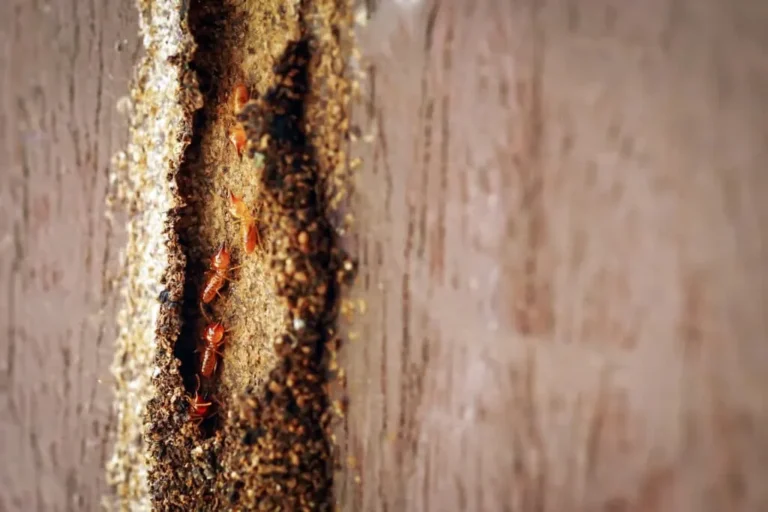
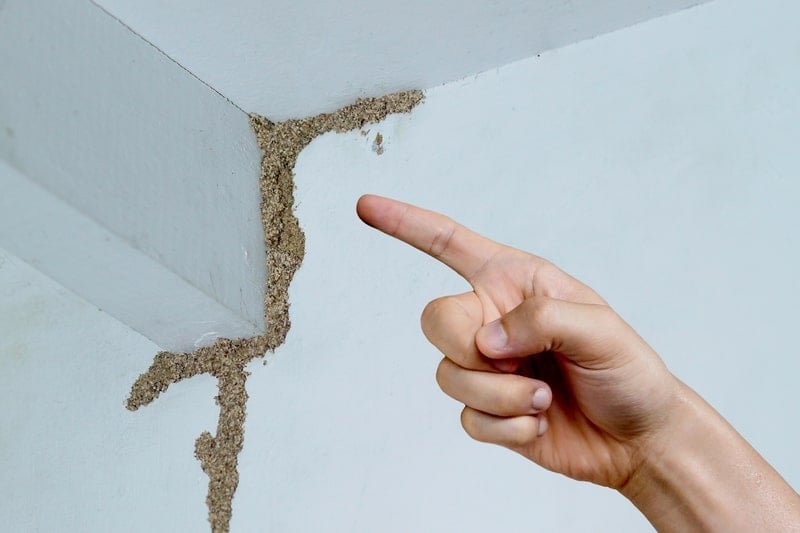
Subterranean termites require constant moisture and protection from dry open air to survive. To travel safely from the soil into the wooden framing of your home, they build pencil-sized mud tubes along exterior foundations, basement walls, crawl spaces, and concrete piers. These earthen tunnels act as protective highways shielding the colony from predators and dehydration.
What to Look for?
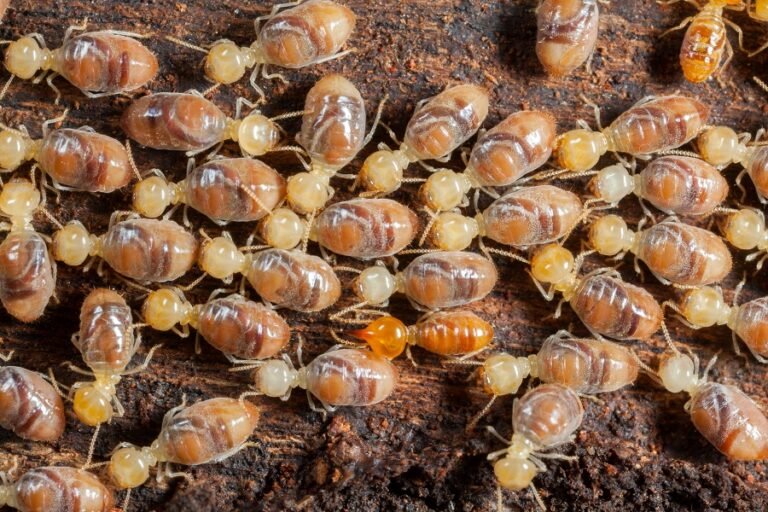
Inspect your foundation walls thoroughly for dry, brownish-grey earthen lines roughly the thickness of a pencil. Break open a small section; if you see pale, ant-like insects moving inside, you are dealing with an active subterranean infestation.
Hollow-Sounding Wood
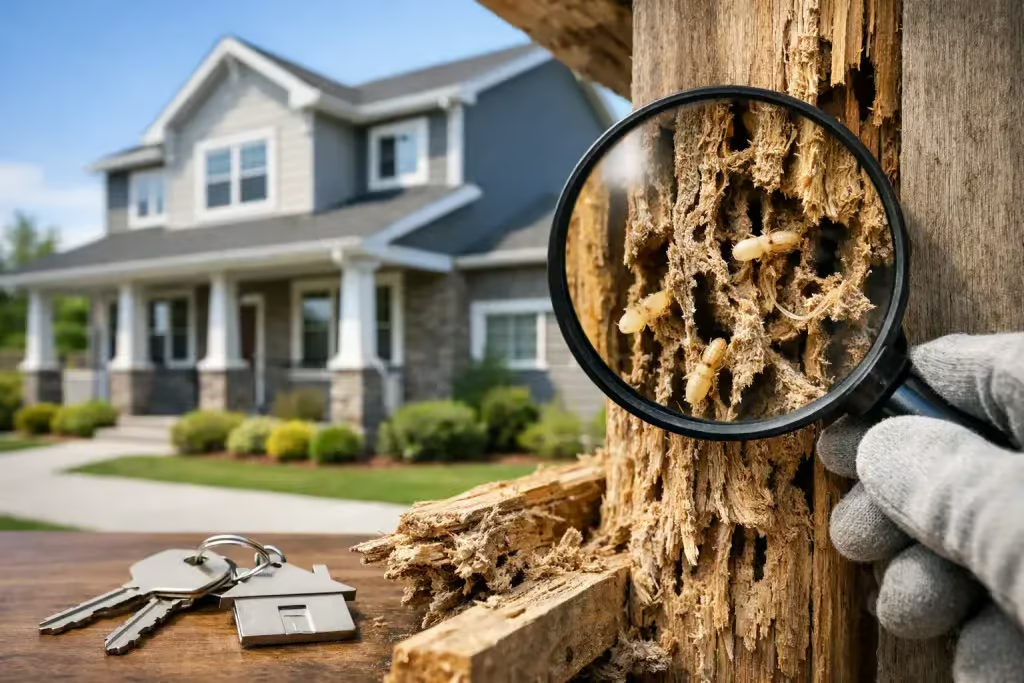
Termites consume wood structural elements strictly from the inside out, often leaving a thin veneer of paint or outer wood completely untouched. This feeding habit leaves the structural timber structurally compromised while looking fine on the surface. If you knock on support beams, floorboards, or door frames and hear a papery or hollow echo, it indicates timber has been hollowed out.
What to Look for?
Regularly tap on wooden baseboards and structural beams using a screwdriver handle or your knuckles. Any sudden hollow acoustics or soft spots that puncture easily under light pressure demand an immediate professional evaluation.
Discarded Wings Near Windows and Sills
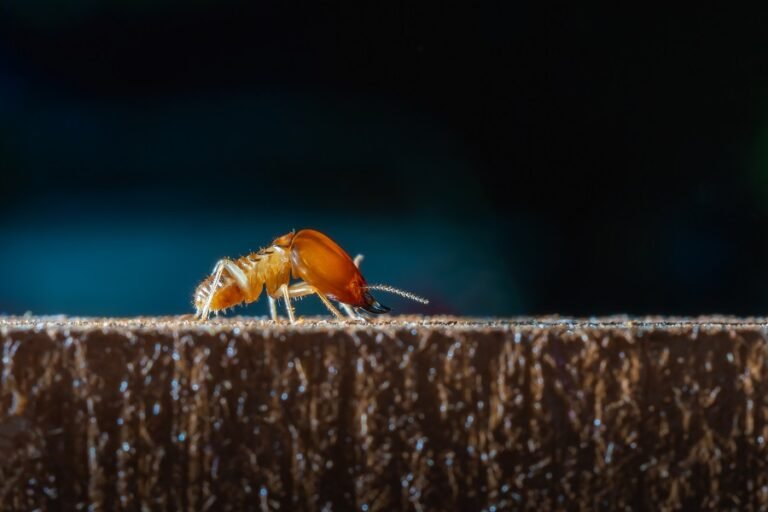
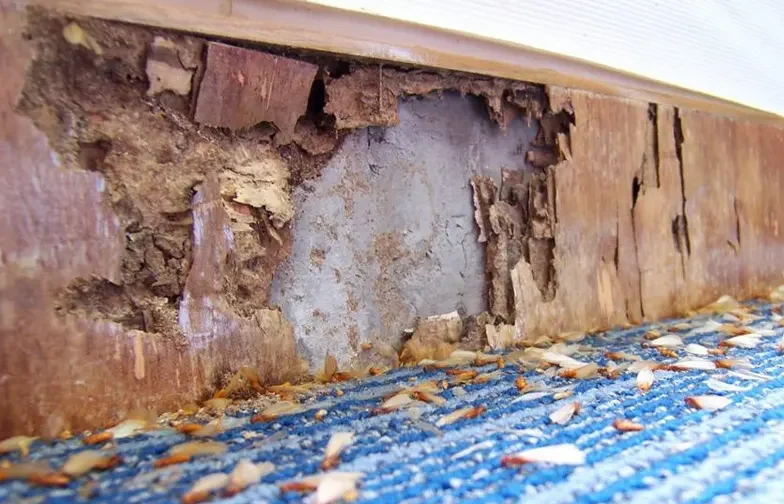
During warmer months, mature termite colonies produce winged reproductive insects known as swarmers. These swarmers leave their original nests to fly out, find a mate, and establish brand-new colonies elsewhere. Once they locate a suitable environment, they immediately twist off their wings, as they no longer need to fly.
What to Look for?
Check your windowsills, doorways, and spider-web-heavy corners for tiny piles of identical, uniform-sized translucent wings. Discovering discarded wings indoors is one of the most definitive indicators that a mature colony lives nearby.
Tight-Fitting Doors and Stubborn Windows
As subterranean and dampwood termites tunnel extensively through wooden door frames and window sills, they introduce elevated moisture levels and metabolic waste. This extra moisture and internal tunneling cause the surrounding timber to warp, swell, and shift out of alignment. If interior doors suddenly stop closing smoothly or windows stick.
What to Look for?
Note any doors or windows that become surprisingly difficult to latch or slide. While seasonal humidity can play a role, persistent sticking combined with other signs strongly points toward hidden termite activity warping the frame.
Bubbling or Peeling Paint
Termite infestations generate localized humidity and warmth inside closed wooden cavities. When these destructive insects tunnel extremely close to painted surfaces, the trapped moisture causes the paint layer to blister, bubble, or peel away from the wall. This visual distortion looks remarkably similar to standard water damage from a leaky pipe.
What to Look for?
Examine painted drywall, baseboards, and window trims for blistering paint. If you find bubbling surfaces but can rule out active plumbing leaks or roof vulnerabilities, investigate the wood underneath for hidden pest activity.
Frass (Termite Droppings)
Unlike subterranean species, drywood termites do not build mud tunnels or consume damp materials. Instead, they nest directly inside dry timber and push their granular waste out of tiny structural exit holes to keep their galleries clean. This waste material is known as frass and accumulates in small, distinct mounds.
What to Look for?
Look closely for tiny piles of hard, pellet-like droppings that closely resemble coarse sand or coffee grounds. Finding these small mounds beneath exposed ceiling beams or furniture signals an active drywood termite problem.
Protect Your Home Today!
If you spot any of these warning signs, time is of the essence. Termite colonies grow exponentially and can cause extensive structural damage in a matter of months. Schedule a professional inspection immediately to utilize advanced detection tools and secure targeted treatment options before minor damage turns into a major crisis.