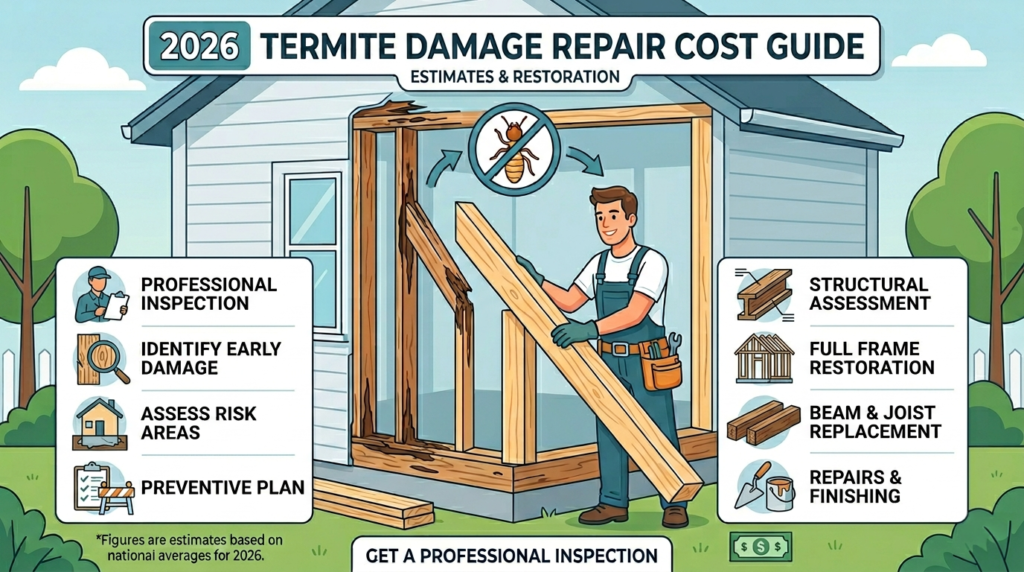
Discovering a termite infestation is a homeowner’s nightmare, but the subsequent repair bill can be even scarier. As we move through 2026, rising material costs and labor shortages have shifted the pricing landscape for pest remediation.
If you’ve spotted mud tubes or hollow-sounding wood, here is the comprehensive breakdown of what you can expect to pay for termite damage repairs and treatments this year.
The Short Answer: 2026 Cost Estimates
For most homeowners, termite damage repair costs in 2026 range from $1,000 to $10,000. However, if the integrity of your home’s foundation or load-bearing beams is compromised, that figure can easily soar past $30,000.
| Damage Level | Type of Repair | Estimated Cost (2026) |
| Minor/Cosmetic | Baseboards, trim, window sills | $500 – $3,000 |
| Moderate | Flooring, subfloors, drywall | $2,000 – $8,000 |
| Structural | Load-bearing beams, joists, wall studs | $5,000 – $20,000+ |
| Severe | Full foundation or roof framing | $30,000 – $50,000+ |
Cosmetic vs. Structural Repairs
The cost of your project depends heavily on how deep the “silent destroyers” have traveled. Differentiating between cosmetic and structural damage is the first step in budgeting. Cosmetic issues affect your home’s aesthetics, such as scarred trim or ruined flooring, while structural damage compromises the very bones of the building. Understanding this distinction is vital, as structural failures pose safety risks and require significantly more invasive, expensive professional interventions to resolve effectively.
Cosmetic Repairs ($500 – $3,000)
These are surface-level fixes that restore your home’s visual appeal. Termites often chew through baseboards, door frames, and hardwood flooring. In 2026, with the cost of finish-grade lumber remaining high, replacing custom trim or staining new floorboards to match aged wood drives up labor costs. While these repairs are manageable, they should only begin once a professional confirms the colony is gone.
Structural Repairs ($5,000 – $30,000+)
This is where it gets expensive. If termites have eaten into the sill plate (the wood that connects your home to the foundation) or support joists, you cannot simply “patch” the wood. Contractors must often jack up parts of the house to slide in new support beams. This requires:
- Structural Engineer Assessment: $500 – $1,000
- Specialized Carpentry Labor: $100 – $200 per hour
The “Hidden” First Step: Extermination Costs
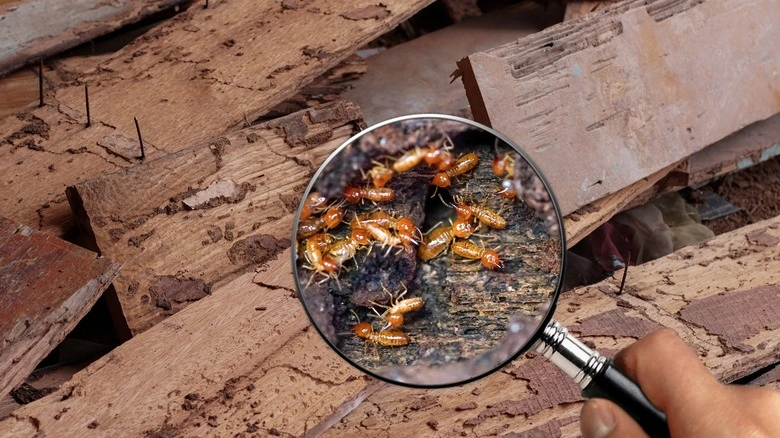
You cannot repair the damage until the colony is gone. In 2026, professional extermination prices vary based on the method:
Bait Stations ($1,000 – $2,500)
Bait stations are a proactive, long-term solution for 2026. Professionals install these discreet cylinders around your home’s perimeter, containing cellulose material laced with slow-acting growth inhibitors. Foraging termites share the bait with the colony, eventually eliminating the entire nest, including the queen. This method is preferred for its minimal environmental impact and its ability to provide ongoing, year-round monitoring.
Chemical Soil Treatment ($3 – $20 per linear foot)
This traditional method creates an invisible liquid barrier around your foundation. In 2026, technicians use advanced non-repellent termiticides that termites cannot detect. As they pass through the treated zone, they carry the pesticide back to the hive. While it requires trenching or drilling around the home, it remains one of the most effective ways to prevent subterranean termites from entering.
Fumigation (Tenting) ($2,500 – $8,000)
Reserved for severe drywood termite infestations, fumigation involves draping your entire home in a specialized “tent.” A lethal gas is circulated to penetrate every crevice, beam, and wall, ensuring 100% eradication of all active colonies. While it requires the family and pets to vacate for several days, it is the most definitive “reset button” for a heavily infested property.
Heat Treatment ($2,000 – $6,000)
An eco-friendly alternative to chemicals, heat treatment involves raising the internal temperature of specific wood structures to approximately 120°F–140°F. Since termites cannot survive extreme heat, this method kills them instantly. It is highly effective for localized infestations and is favored by 2026 homeowners who want a non-toxic solution that doesn’t require moving out or discarding refrigerated food items.
Factors Influencing Your 2026 Quote
Several variables will dictate whether your bill is on the low or high end of the spectrum:
Termite Species
The type of termite invading your home significantly dictates the final repair bill. Formosan termites are exceptionally aggressive, capable of causing massive structural damage within months. In contrast, Eastern Subterranean termites work slower but are more common. In 2026, identifying the specific species through a professional inspection is crucial, as treatment protocols and the speed of necessary repairs vary widely.
Accessibility
Labor costs in 2026 are heavily influenced by how easily a contractor can reach the damage. If termites have compromised floor joists within a tight crawlspace or deep inside finished attic eaves, expect a price premium. Hard-to-reach areas require specialized equipment and more billable hours, often increasing the total labor quote by 20% to 30% compared to accessible repairs.
Material Prices
Current market fluctuations for construction materials play a major role in your 2026 estimate. The cost of pressure-treated lumber, structural steel connectors, and finish-grade hardwoods remains volatile. When repairing termite damage, using high-quality, rot-resistant materials is essential for long-term protection, but these premium supplies can significantly inflate the total project cost compared to standard building materials.
Does Homeowners Insurance Cover Termite Damage?
In 90% of cases, the answer is no. Most insurance providers categorize termite damage as a “preventable maintenance issue” rather than a sudden peril (like a fire or storm). This makes early detection and annual inspections—typically costing $100 to $300—the best financial investment you can make.
Conclusion
Facing termite damage in 2026 requires a proactive strategy to protect your home’s equity. While the repair costs can be significant, ranging from minor cosmetic fixes to major structural overhauls, early intervention remains the best way to minimize financial impact. By combining professional extermination with high-quality repairs, you ensure your property remains safe and marketable. Don’t wait for signs to worsen; professional inspections are your strongest defense against these silent destroyers.