For homeowners in the San Ramon Valley, the scenic beauty of Danville comes with a hidden cost: a high susceptibility to termite activity. While we enjoy our Mediterranean climate, so do the two most common wood-destroying pests in Northern California—Subterranean and Drywood termites.
At Prolific Inspections, we’ve seen how a “small” issue can quickly turn into a five-figure repair bill. Because termites are “silent destroyers,” they often go unnoticed until the structural integrity of a home is compromised.
Here are the top warning signs of termite damage every Danville homeowner should monitor.
Mud Tubes on the Foundation
Subterranean termites are moisture-dependent architects that build “mud tubes”—pencil-sized tunnels made of soil, debris, and saliva—to bridge the gap between their underground colonies and your home’s wooden structure. These tubes act as climate-controlled highways, protecting termites from predators and the dehydrating open air. Finding these earthy veins on your concrete foundation is a definitive sign of an active infestation.
Where to Look?
To catch an infestation early, perform a perimeter sweep of your property. Focus on the interface where the soil meets your concrete foundation, as this is the primary entry point for subterranean species. Inspect crawl spaces, basement walls, and wooden porch steps closely. Don’t forget to check behind thick vegetation or mulch beds, which can trap moisture and hide mud tubes from plain sight. At Prolific Inspections, we also examine sub-flooring and support beams for these telltale signs.
The Danville Factor
Danville’s unique geography—nestled between the moisture-trapping Las Trampas Ridge and Mt. Diablo—creates a high-pressure zone for termite activity. Our Mediterranean climate, characterized by damp winters and hot, dry summers, forces termites to seek the consistent environment found within residential foundations. Furthermore, the lush, irrigated landscaping common in upscale Danville neighborhoods provides the constant soil moisture these pests crave. This local environmental cocktail makes routine professional inspections a seasonal necessity for homeowners looking to preserve their property value.
“Sawdust” Piles (Frass)
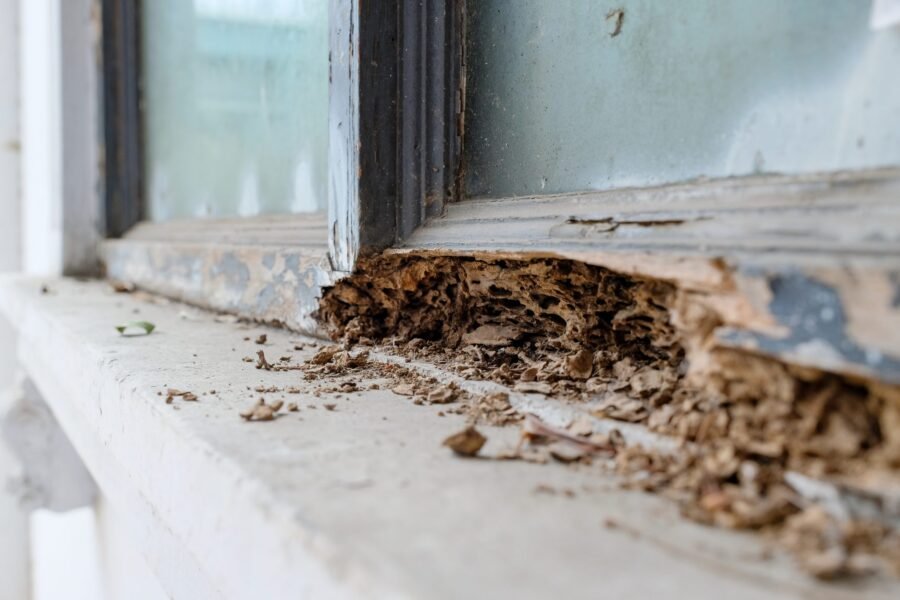
Unlike subterranean termites that use mud, Drywood termites are meticulous housekeepers. They kick their waste out of “kick-out holes” to keep their galleries clean. This debris, known as frass, often looks like small piles of sawdust or coffee grounds. If you find mysterious grit accumulating on windowsills, baseboards, or inside cabinets, it is a definitive sign that a colony is active directly above that spot.
Identification
To the untrained eye, frass can look like common household dust or debris from a DIY project. However, closer inspection reveals a distinct structure. Drywood termite pellets are incredibly small—about the size of a grain of salt—and possess a unique hexagonal shape with six concave sides. Unlike wood shavings from carpenter ants, which are irregular and fibrous, termite frass is uniform in size and shape. Its color typically matches the wood the termites are currently consuming.
Pro Tip
If you discover a suspicious pile, perform the “Clean and Watch” test. Thoroughly vacuum the area and wait 48 to 72 hours. If the “sawdust” reappears in the exact same location, you have confirmed an active, localized infestation that requires professional treatment. At Prolific Inspections, we recommend marking these spots with blue painter’s tape before your appointment. This helps our inspectors quickly identify the most high-pressure zones in your Danville home, ensuring no colony goes undetected during the walkthrough.
Discarded Wings and Swarmers
When a termite colony matures, it produces “swarmers”—winged reproductives tasked with starting new colonies. In the Danville area, these sightings typically peak during warm, calm days following a rainstorm. Seeing these insects flying inside your home is a major red flag; it often indicates that a well-established colony is already living within your walls and is now attempting to expand.
The Sign
The most common evidence of a swarm isn’t the insects themselves, but the aftermath they leave behind. Once a swarmer finds a mate, it intentionally sheds its wings, as it will never fly again. You will often find these translucent, silvery piles of wings littering your windowsills, trapped in spiderwebs near light fixtures, or gathered in the corners of your garage. If you see dozens of discarded wings, it confirms a local “nuptial flight” has occurred nearby.
Don’t Mistake Them for Ants
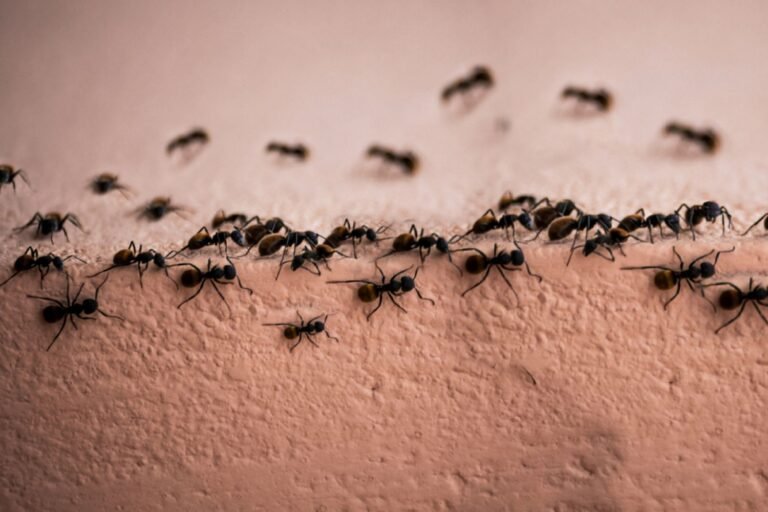
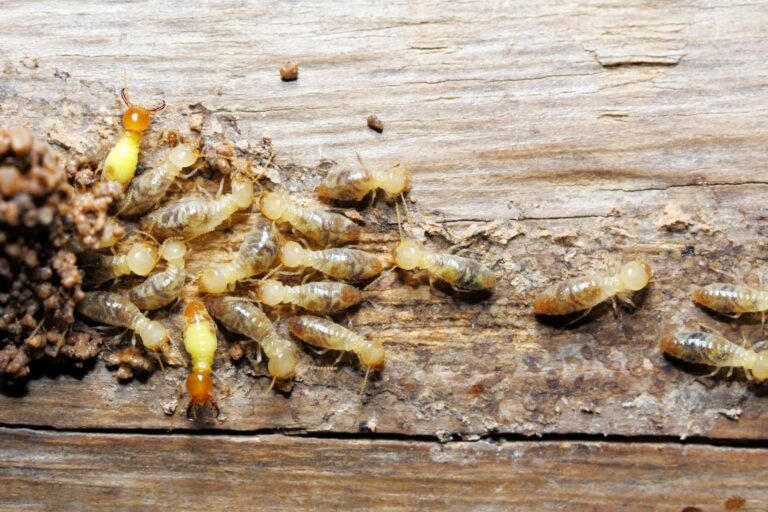
Homeowners often breathe a sigh of relief thinking they just have “flying ants,” but the physical differences are critical for proper treatment. Termites have straight antennae and a broad, uniform waist, whereas ants have elbowed antennae and a distinct, pinched “wasp-waist.” Most importantly, look at the wings: termite swarmers have four wings of equal length that are much longer than their bodies, while flying ants have larger front wings and significantly smaller hind wings.
Hollow-Sounding Wood
Termites are internal consumers; they devour the cellulose within your home’s structural timber while leaving the exterior paint or veneer intact to protect their colony. This means your walls, baseboards, and support beams can look perfectly normal on the surface while being structurally compromised inside. If wood looks solid but feels “light,” it’s a major red flag for Danville homeowners.
The Test
To check for hidden damage, perform a “tap test” on exposed wood throughout your home. Use the handle of a heavy screwdriver or a small mallet to gently tap along baseboards, door frames, and floor joists. Listen for a dull, hollow thud rather than a solid “crack” of healthy wood. If the wood sounds like empty cardboard or if your finger can easily puncture the surface, the interior has likely been hollowed out by active feeding.
Advanced Sign
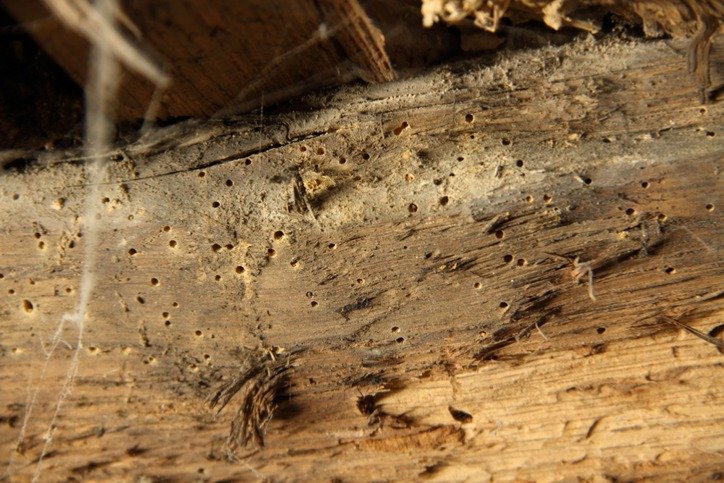
In more severe or long-standing infestations, you may notice “galleries” or maze-like tunnels if the wood’s surface finally breaks. These tunnels are often lined with a thin coating of mud or soil in the case of subterranean termites. Additionally, look for “blistering” on floorboards or wood trim. This occurs when termites tunnel too close to the surface, causing the wood or paint to bulge and look like it has suffered from minor water damage.
Tight-Fitting Doors and Stuck Windows
As termites consume the internal structure of window and door frames, the wood can warp or swell. Additionally, the moisture introduced by a termite colony can cause the wood to expand.
The Symptom
If a door that used to swing freely now sticks, or a window becomes difficult to slide, it may not be “settling”—it could be a sign of active feeding.
Termite Damage vs. Water Damage: How to Tell the Difference?
In Danville, it’s common to confuse termite damage with dry rot or water damage. Use the table below for a quick comparison:
| Feature | Termite Damage | Water Damage / Dry Rot |
| Appearance | Clean, maze-like galleries | Spongy, stringy, or “cubed” texture |
| Residue | Mud (Subterranean) or Pellets (Drywood) | Fungal growth or dark staining |
| Sound | Hollow when tapped | Soft or “punky” when pressed |
Why Danville Homes are at Risk in 2026?
Recent weather patterns in the East Bay—shifting between heavy winter rains and hot, dry summers—have created the perfect environment for termite expansion. Subterranean termites thrive in the moisture, while Drywood termites capitalize on the heat.
Protect Your Investment with Prolific Inspections
A standard home inspection doesn’t always go deep enough. A specialized Wood Destroying Organism (WDO) Inspection is the only way to ensure your property is truly protected. At Prolific Inspections, we provide:
- Comprehensive Attic & Crawl Space Sweeps
- Moisture Detection (to find high-risk areas)
- Detailed Digital Reports with photos and repair estimates