Finding mysterious piles of dust or small, dark insects near your woodwork can send any homeowner into a panic. Are they termites or carpenter ants? While both pests cause significant and expensive damage to your home’s structure, they are fundamentally different, and their distinct signs can tell you exactly which enemy you’re up against.
Identifying the culprit is the critical first step to choosing the right treatment. Here is your definitive guide on how to tell the difference between termites and carpenter ants.
The Physical Face-Off: Key Differences in Appearance
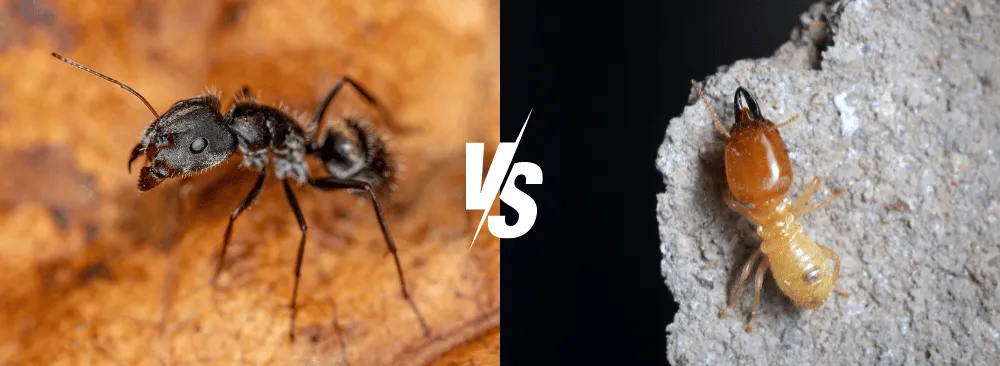
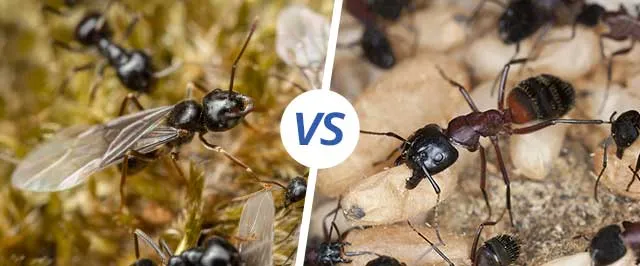
If you can get close enough to one of the swarmers (the winged, reproductive insects that emerge to start new colonies), these three features are the clearest way to tell them apart:
| Feature | Termites (Swarmers) | Carpenter Ants (Swarmers) |
| Waist | Thick/Broad. No visible constriction between the thorax and abdomen. | Pinched. Has a narrow, hourglass-like waist, just like a typical ant. |
| Antennae | Straight and Beaded. Resemble a string of tiny pearls. | Elbowed/Bent. Clearly bent at a 90-degree angle. |
| Wings | Equal in Size. Both pairs of wings are the same length and size, and often much longer than the body. Shed easily. | Unequal in Size. The front pair of wings is noticeably longer than the back pair. Do not shed easily. |
Quick Visual Tip
If the insect looks like a small, white cigar with wings, it’s likely a termite. If it looks like a large, black ant with wings, it’s likely a carpenter ant.
Damage Analysis: The Difference Between Eating and Nesting
The most significant difference between these two pests lies in their relationship with wood. This results in distinct types of damage left behind in your home.
Termite Damage: They Eat Your Home
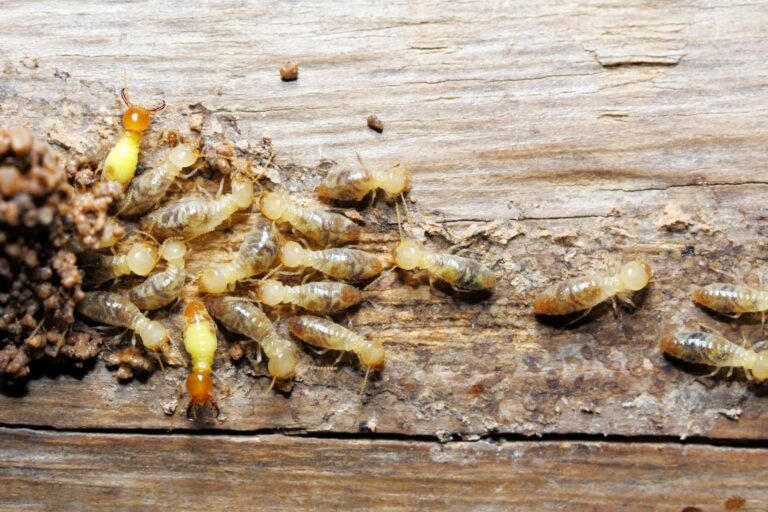
Termites are often considered far more destructive because they consume the wood (cellulose) for sustenance. They are active 24/7, and damage can escalate quickly and often go undetected for years.
| Sign of Infestation | Description & Clues |
| Wood Tunnels (Galleries) | Rough and Gritty. Termite tunnels (galleries) are ragged, rough, and often packed with soil, mud, and fecal matter. |
| Mud Tubes | The Telltale Sign. Pencil-width tubes found on foundation walls, crawl spaces, or connecting the ground to wooden structures. Subterranean termites use these for safe travel. |
| Frass (Droppings) | Tiny Pellets. Drywood termites push out tiny, uniform, pellet-like droppings (frass). Subterranean termites usually use their frass to build their tunnels. |
| Discarded Wings | Equal-Sized Piles. Finding small piles of four equal-sized wings near windowsills or light sources after a swarm. |
Carpenter Ant Damage: They Hollow Out Your Home
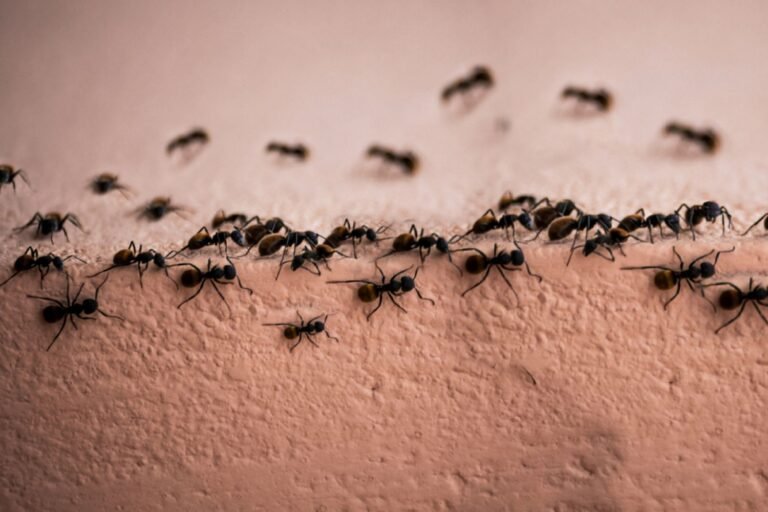
Carpenter ants do not eat wood. They excavate it to create smooth, clean-walled tunnels and galleries where they nest and raise their young. They will travel outside the nest to forage for food (sweets, protein, dead insects).
| Sign of Infestation | Description & Clues |
| Wood Tunnels (Galleries) | Smooth and Clean. The tunnels they create look like they’ve been meticulously sanded, with no soil or mud present. |
| Wood Shavings/Frass | Looks like Sawdust. Piles of coarse, sawdust-like material (called frass) will accumulate near kick-out holes in the wood. This is the material they remove to build their nest. |
| Noises | Faint Rustling. You might hear faint, crackling, or rustling sounds coming from inside your walls or woodwork, especially at night when they are most active. |
| Preferred Location | They prefer moist, damp, or decaying wood to start their nests, often near leaky windows, plumbing, or improperly vented areas. |
Why Does Proper Identification Matter?
Failing to distinguish between a termite and a carpenter ant means you will apply the wrong treatment, which is both ineffective and costly. Termite treatments, often involving liquid barriers or soil trenching, are drastically different from the targeted approach needed for carpenter ants, which focuses on locating and destroying a specific, localized nest. Misdiagnosis wastes valuable time, allowing the true pest to continue its destruction and leading to more extensive and expensive repairs down the line. Know your enemy to defeat it.
Getting the diagnosis right is crucial because the treatment for each is completely different:
Termites
Termites are the most destructive wood-infesting pests, as they actively consume wood (cellulose) for sustenance, working 24 hours a day. The key identification markers are a thick waist, straight antennae, and two sets of equal-sized wings that are easily shed. Their damage is characterized by rough, mud-packed tunnels (galleries) and visible mud tubes running along foundation walls, which they use for protected travel. Their presence signals a severe structural threat that requires an aggressive, whole-house treatment to prevent the widespread collapse of structural supports.
Carpenter Ants
Carpenter ants do not eat wood; they simply excavate it to create smooth, clean-walled tunnels where they establish their nests. Physically, they possess a distinct pinched, narrow waist and elbowed (bent) antennae, making them look like larger versions of common ants. The primary signs of their presence are piles of sawdust-like frass (excavated wood material) near small openings, and the wood galleries they create are noticeably smooth and free of mud. Their infestation often indicates an underlying moisture problem in the wood that must be resolved alongside the localized pest treatment.
Final Thoughts
Whether you are facing the wood-eating termite or the nest-building carpenter ant, swift and accurate identification is your best defense. Look closely at the physical features the waist, antennae, and wings and inspect the damage for mud tubes versus smooth, sawdust-filled galleries. Do not delay action; both pests pose a serious threat to the structural integrity and value of your home. If in doubt, always consult a professional to ensure the correct treatment is applied quickly and effectively.